
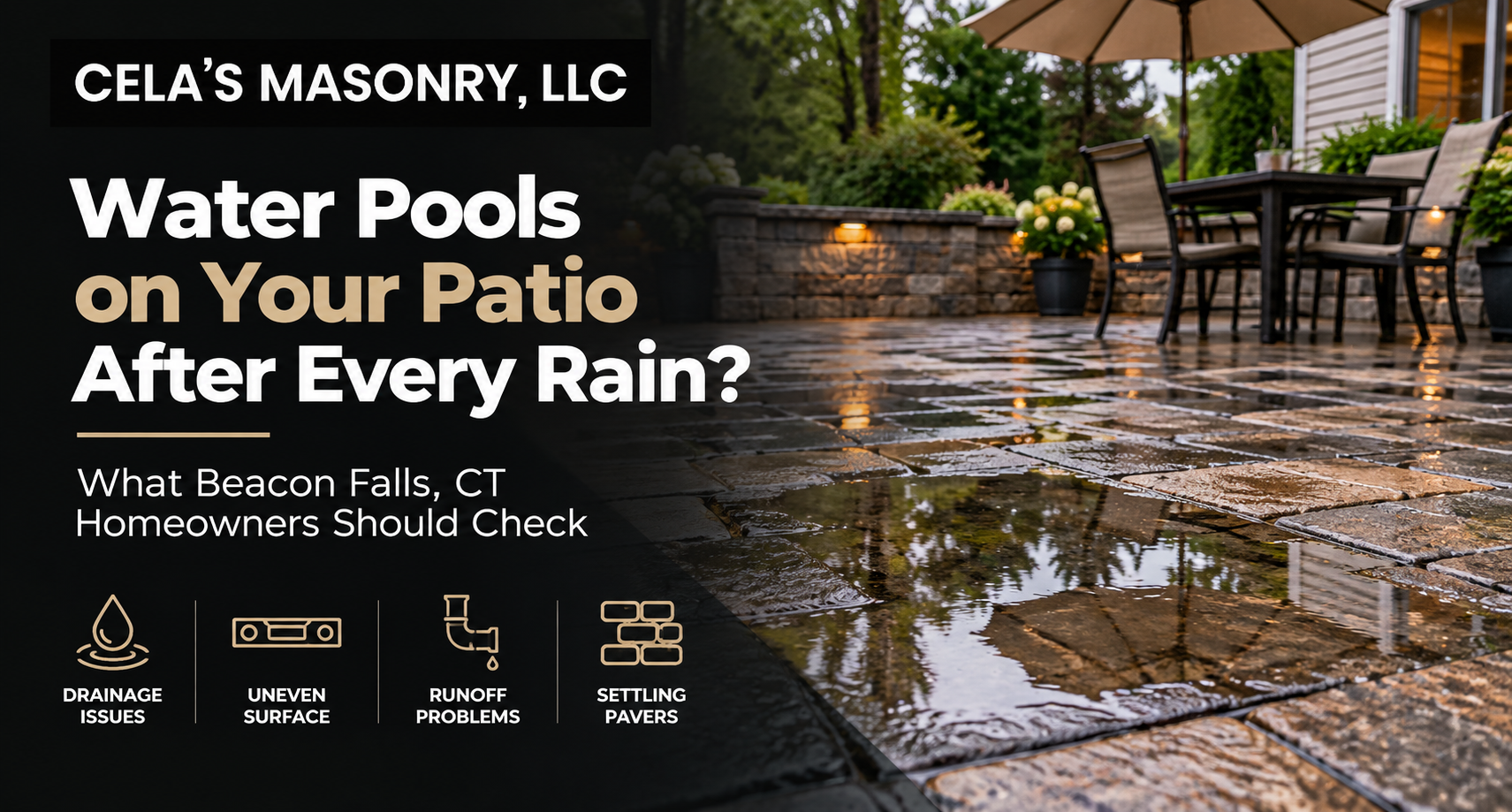
A patio can look perfectly level, clean, and well-built on a sunny day. Then a heavy rain arrives, and suddenly there are puddles sitting in the same areas for hours. A small amount of temporary surface water may not always indicate a major problem, but water that repeatedly collects in the same place deserves attention.
For homeowners in Beacon Falls, Connecticut, understanding why patio water pools is especially useful because rainfall, changing temperatures, surrounding landscaping, and seasonal freeze-thaw cycles can all influence outdoor surfaces over time. Instead of simply sweeping the water away, it helps to understand where it is coming from and why it is not draining properly.
Why Does Water Collect on a Patio?
Water naturally follows the easiest path downhill. A patio generally needs an appropriate slope and surrounding drainage conditions so rainwater can move away rather than settle into low areas.
Pooling can develop when part of the patio is slightly lower than the surrounding surface. Settlement underneath stones or pavers, changes in nearby soil, poor drainage, or runoff coming from another part of the property may also contribute.
Companies such as Cela’s Masonry LLC work with patios, walkways, retaining walls, and other masonry features where proper planning of the surrounding landscape is an important part of long-term performance.
Check Where the Water Appears
The location of the puddle can tell you a lot.
If water collects in the middle of the patio, there may be a low spot in the surface. If it consistently appears along one edge, water may be flowing toward the patio from the lawn or another elevated area.
Water collecting close to the house deserves particular attention. The goal should generally be to manage exterior water so it does not repeatedly collect against the building.
Observe the patio during or shortly after rainfall rather than only after everything has started drying. Watching how the water moves can make the source easier to understand.
Has Part of the Patio Settled?
Patios depend on what is underneath the visible stone or paver surface. Proper preparation of the base helps create a stable surface and supports drainage.
Over time, however, certain areas can sometimes settle. You may notice that one stone sits slightly lower, water always gathers around the same group of pavers, or the patio no longer feels as even as it once did.
When working with a Custom stone patio contractor in Beacon Falls CT, homeowners can discuss site conditions, grading, base preparation, drainage, and how water is expected to move around the completed patio.
Look Beyond the Patio Itself
The patio may not actually be where the drainage problem begins.
Check nearby downspouts, roof runoff, lawn slopes, garden beds, walkways, and other hard surfaces. A downspout releasing a large amount of water near the patio can change how quickly the area drains. Similarly, landscaping that slopes toward the patio can direct additional runoff onto the surface.
Think of the patio as one part of a larger outdoor drainage system. Water does not follow property features or design boundaries; it simply moves according to elevation and available paths.
Could a Retaining Wall Affect Water Movement?
Properties with changes in elevation may use retaining walls to help manage soil and create usable outdoor spaces. Because retaining walls interact with slopes and soil, drainage around them is an important consideration.
If a patio sits near or below a retaining wall, pay attention to where water travels after rainfall. Wet areas near the wall, soil washing out, or runoff moving toward the patio may indicate that the broader landscape needs evaluation.
Homeowners researching Natural stone retaining walls in Waterbury can also consider how a wall fits into the property’s overall grading and drainage plan rather than viewing it only as a decorative feature.
Connecticut Winters Can Reveal Low Spots
Connecticut’s seasonal temperature changes can make small patio problems more noticeable.
When water repeatedly collects in a low area and temperatures drop below freezing, that water can freeze. Repeated freezing and thawing may place additional stress on joints and surrounding materials.
This does not mean every puddle will damage a patio. However, persistent drainage problems are worth investigating before multiple seasons pass.
Don’t Automatically Fill the Low Area
When homeowners see a low stone or paver, the first instinct may be to simply raise that section.
But correcting the visible low spot without understanding why it developed may not provide a lasting solution. If runoff, base settlement, grading, or another drainage condition caused the problem, the same issue could return.
The better approach is to identify both the symptom and the source.
When Should You Have the Patio Checked?
Consider professional evaluation if water remains for unusually long periods, pooling becomes worse over time, sections of the patio are visibly sinking, stones become loose or uneven, soil is washing away, or water repeatedly moves toward the home’s foundation.
Also pay attention to changes rather than waiting for dramatic damage. A patio that drained normally for years but suddenly develops standing water is giving you useful information that something may have changed.
Final Thoughts
Water pooling on a patio does not automatically mean the entire patio needs to be rebuilt. Sometimes the cause may be a localized low spot or runoff from another area of the property.
What matters is understanding why the water keeps returning to the same place. Observe the direction of runoff, check nearby landscaping and downspouts, look for settlement, and consider how retaining walls or slopes affect drainage. Addressing the cause instead of only removing the puddle can help keep an outdoor space safer, more comfortable, and better prepared for changing Connecticut weather.