
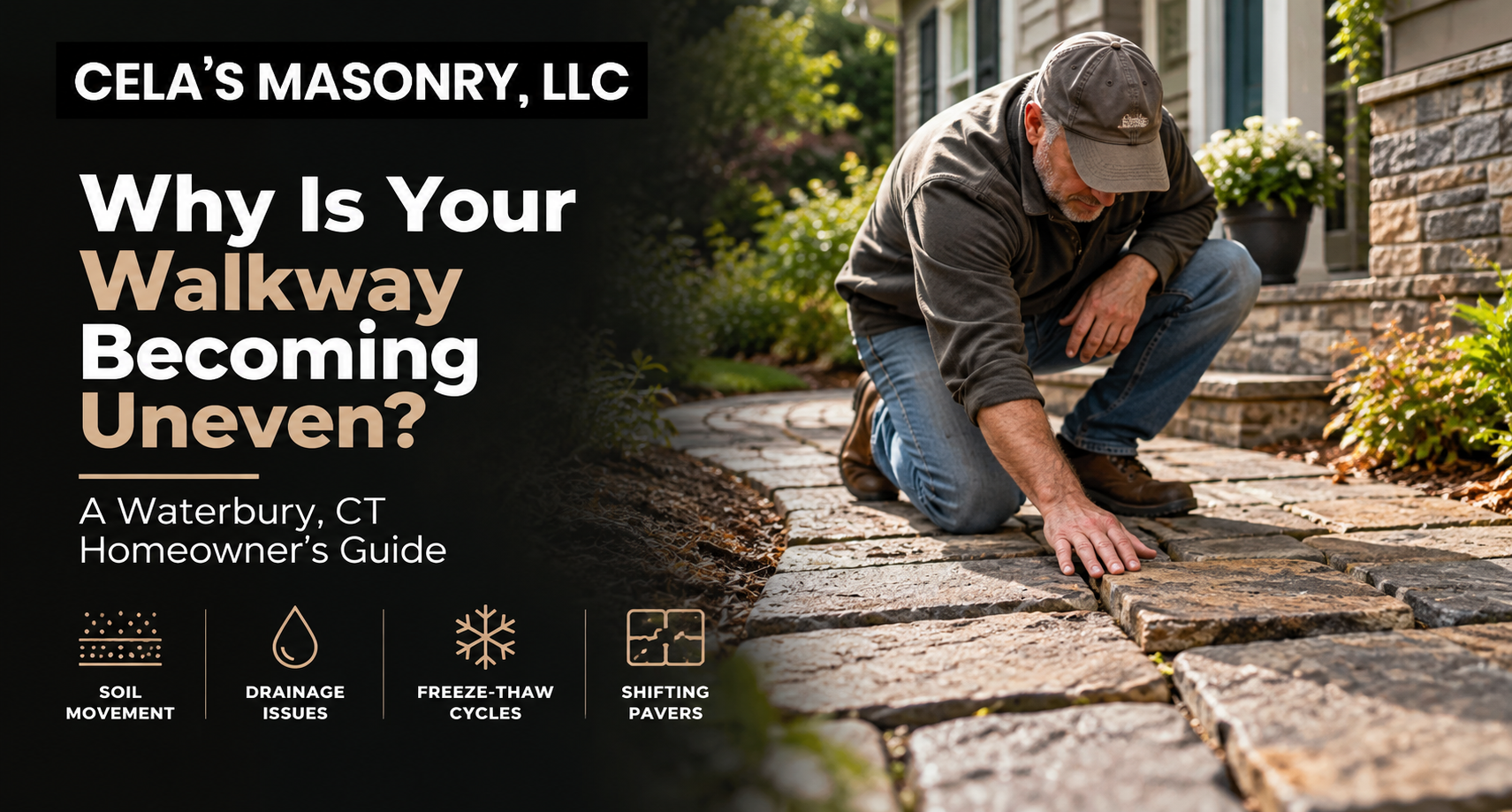
A walkway can look perfectly fine when it is first installed, but over time you may notice that some sections begin to sink, shift, or rise above the surrounding surface. Uneven walkways are more than a cosmetic issue. They can make walking less comfortable, create trip hazards, and allow water to collect in areas where it should normally drain away.
For Waterbury, CT homeowners, understanding why a walkway becomes uneven can help you identify potential problems early and determine whether the surface needs simple maintenance, repair, or more extensive work.
What Causes a Walkway to Become Uneven?
There is rarely one single reason why a walkway moves. Soil conditions, drainage, weather, installation methods, and the material used can all contribute.
A walkway is supported by the ground beneath it. If that base changes over time, the surface above it can move as well. Even a small amount of movement may become noticeable when individual stones, pavers, or sections no longer sit at the same height.
Understanding what is happening underneath the walkway is therefore just as important as looking at the visible surface.
Poor or Shifting Base Material
One common reason for an uneven walkway is movement in the base beneath it.
Before installing a walkway, the ground typically needs to be prepared and compacted appropriately. If the base is insufficient, unevenly compacted, or affected by changes in the soil, sections of the walkway may settle differently.
This can result in low spots, raised edges, or areas where individual pavers have shifted.
Simply placing additional material on top may not permanently solve the problem if the underlying base remains unstable.
Water and Drainage Can Play a Major Role
Water is another important factor to consider.
Rainwater that repeatedly collects underneath or beside a walkway can affect the surrounding soil. Poor drainage may cause certain areas to become saturated, while runoff can gradually move soil away from the supporting base.
Look at your walkway after a heavy rain. Do you notice puddles in the same location? Does water flow toward the walkway instead of away from it? Are there areas where soil appears to be washing out?
These observations can provide useful clues about why a particular section has started moving.
Connecticut Freeze-Thaw Cycles Matter
Water and changing temperatures can also work together during winter.
When moisture in the ground freezes, it expands. As temperatures rise, the ice melts and the ground can settle again. Repeated freezing and thawing can contribute to movement in outdoor surfaces, particularly where drainage or base preparation is already an issue.
This does not mean every uneven walkway is caused by winter weather. However, if you notice that your walkway changes noticeably after winter, the freeze-thaw cycle may be one factor worth considering.
Different Materials Can Move Differently
The type of walkway material also matters.
Pavers, natural stone, concrete, and other materials have different installation and maintenance considerations. Individual pavers or stones may shift independently, while a concrete walkway may develop cracks or changes in elevation in a different way.
For homeowners planning other outdoor improvements, understanding how different surfaces work together is also useful. For example, a Custom stone patio contractor in Beacon Falls CT can help homeowners consider how a new patio connects visually and practically with existing outdoor areas such as walkways and retaining features.
Look at the Edges of the Walkway
The edges can sometimes reveal what is happening.
If the walkway is separating from nearby landscaping, soil is washing away from the sides, or grass and roots are pushing against the surface, these conditions may contribute to movement.
Also check whether water is flowing along the edge after rainfall. A walkway does not exist independently from the surrounding landscape. Changes in nearby soil, drainage, planting areas, and slopes can affect how the surface performs.
Is the Walkway a Trip Hazard?
An uneven walkway deserves more attention when the difference in height becomes noticeable.
A raised paver, sunken section, or unexpected change in elevation can make the walkway harder to navigate. This can be particularly important around entrances, steps, driveways, and other areas where people regularly walk.
If the surface has become significantly uneven, avoid assuming that adding sand or making a quick surface adjustment will permanently correct the issue. The cause should be understood before deciding how to address it.
Could Nearby Landscaping Be Contributing?
Changes in the surrounding landscape can sometimes affect outdoor masonry.
Tree roots, soil movement, erosion, drainage changes, or construction in a nearby area can alter the conditions around a walkway.
For properties with sloped yards, retaining structures can also influence how soil and water are managed. Homeowners considering Natural stone retaining walls in Waterbury may want to consider how retaining walls, walkways, drainage, and other outdoor features work together rather than treating each project separately.
Repair or Replace?
Not every uneven walkway needs to be completely replaced.
The appropriate solution depends on the material, extent of movement, condition of the base, drainage, and underlying cause. A small area may require a different approach from a walkway that has widespread settlement or structural problems.
Trying to repair only the visible section without addressing the reason it moved may result in the problem returning.
A professional evaluation can help determine whether the existing walkway can be repaired or whether rebuilding part of the installation would be more appropriate.
How Can Homeowners Prevent Future Problems?
Regular observation can help catch changes early.
After heavy rain and winter weather, look for standing water, shifting surfaces, cracks, erosion, or changes in elevation. Keep drainage paths clear and address obvious water-management problems before they become larger concerns.
If you are planning a new outdoor project, consider the entire layout of the property, including how water moves across the yard and how different masonry features connect.
Cela’s Masonry LLC works with homeowners on outdoor masonry projects where factors such as materials, layout, drainage, and site conditions can all be considered as part of the planning process.
Final Thoughts
An uneven walkway is often a sign that something beneath or around the surface has changed. Soil movement, drainage, freeze-thaw cycles, installation conditions, landscaping, and material differences can all play a role.
For Waterbury homeowners, noticing these changes early can help prevent a small uneven area from becoming a larger safety or maintenance concern. Instead of focusing only on making the surface look level again, consider why the walkway moved in the first place. Addressing the underlying conditions can help create an outdoor path that is more stable, practical, and comfortable to use.