
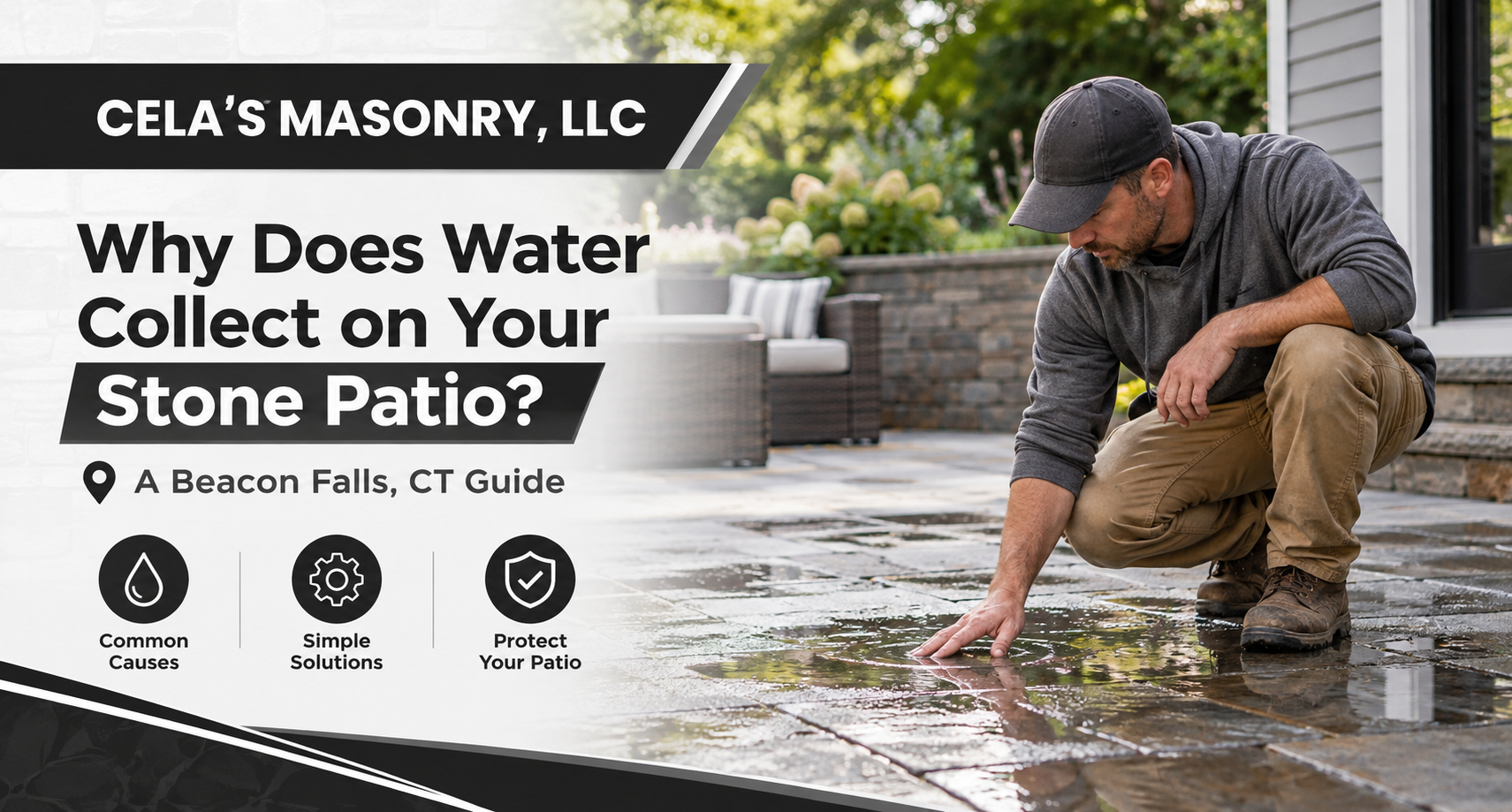
Is water collecting on your stone patio after every rainfall? This common problem can occur because of poor drainage, uneven surfaces, or shifting soil beneath the stones. While small puddles may disappear naturally, standing water that remains for long periods can lead to slippery surfaces and potential damage.
For homeowners in Beacon Falls, CT, understanding the causes of patio drainage problems is important. By identifying the warning signs early, you can protect your outdoor space and avoid unnecessary repairs.
Why Is Water Collecting on Your Stone Patio?
It is common for a patio to become wet during rainfall. However, water should generally drain away rather than remain in large puddles.
If water repeatedly collects in the same spots, there may be an issue with the patio’s slope, base, or surrounding drainage.
Standing water can make surfaces slippery, encourage algae growth, and gradually affect the materials beneath the stones.
Identifying the cause early can help homeowners avoid more complicated repairs.
1. Your Patio May Not Have the Proper Slope
One of the most common reasons for water pooling is an incorrect patio slope.
A properly designed patio generally slopes slightly away from the house to encourage rainwater to drain toward an appropriate outlet.
If the surface is completely flat or slopes toward your home, water may collect instead of flowing away.
Even a small low spot can create a noticeable puddle after heavy rainfall.
When planning a new patio, working with a custom stone patio contractor in Beacon Falls CT can help homeowners understand grading, surface preparation, and drainage requirements.
2. The Base Beneath the Stones May Be Settling
Stone patios depend on a stable foundation.
Before installation, contractors typically prepare and compact the ground and install suitable base materials to support the stone surface.
Over time, poorly compacted soil, erosion, or ground movement can cause sections of the patio to settle.
When certain stones sink lower than others, they create shallow areas where rainwater collects.
You might also notice uneven walking surfaces, loose stones, or widening joints.
These signs may indicate that the underlying base needs attention rather than simply cleaning the patio surface.
3. Soil and Debris Could Be Blocking Drainage
Sometimes, water pooling is caused by something relatively simple.
Leaves, dirt, mulch, and other debris can accumulate around patio edges, drains, or nearby landscaping.
When these materials block normal water flow, rainwater may have nowhere to go.
Check whether soil or mulch has built up higher than the patio surface. Also, inspect nearby drainage openings for visible obstructions.
Regular cleaning can help maintain drainage, but persistent pooling may require a closer examination of the patio’s layout.
4. Your Yard’s Natural Drainage May Be Contributing
A patio does not function separately from the surrounding yard.
If your property slopes toward the patio, rainwater may flow across the lawn and collect on the stone surface.
Downspouts that discharge too close to the patio can also increase the amount of water reaching that area.
In Beacon Falls, properties with uneven terrain may require additional drainage planning to manage runoff.
Possible solutions include adjusting grading, redirecting downspouts, or installing an appropriate drainage system.
The right approach depends on where the water originates and where it can safely drain.
5. Nearby Retaining Walls Can Affect Water Movement
Retaining walls are often used to manage sloped landscapes and create level outdoor spaces.
However, drainage around these structures is important.
If water accumulates behind a retaining wall or cannot move through the surrounding landscape properly, it may contribute to saturated soil and runoff near the patio.
Homeowners researching natural stone retaining walls in Waterbury can learn how retaining structures and drainage planning work together.
A properly designed landscape should consider how patios, walls, slopes, and drainage systems interact.
What Problems Can Standing Water Cause?
Ignoring repeated water pooling may lead to several problems.
Common concerns include:
- Slippery surfaces caused by moisture and algae
- Uneven or shifting patio stones
- Soil erosion around patio edges
- Water reaching areas close to the home’s foundation
- Freeze-thaw damage during colder months
Not every puddle indicates serious damage. However, water that remains for extended periods or repeatedly appears in the same location should be investigated.
How Can You Prevent Water From Collecting?
Start by observing your patio during and after rainfall.
Notice where the water comes from, where it collects, and how long it takes to disappear.
Keep drains and patio edges clear of debris, check downspout discharge locations, and watch for sinking or loose stones.
If the problem continues, a masonry professional can assess the surface slope, base condition, and surrounding drainage.
Avoid lifting and resetting stones without understanding the underlying cause, as the same problem may return.
Final Thoughts
Water collecting on a stone patio is more than a minor inconvenience. It can indicate drainage issues, uneven surfaces, or changes beneath the patio.
For Beacon Falls, CT homeowners, understanding these warning signs can help protect outdoor spaces and reduce unnecessary repair costs.
Cela’s Masonry LLC provides masonry services for homeowners exploring stone patio construction and outdoor improvements.
Whether you are planning a new patio or dealing with recurring puddles, proper drainage and a stable foundation are essential for creating a safe, attractive, and long-lasting outdoor space.